← Back to Projects LLM Data Agent with RAG + SQL
Query both unstructured documents and structured PostgreSQL data through an LLM-powered assistant with multilingual RAG, semantic retrieval, citations, and natural-language data access.
Categories
Agentic AIRAGNLP
Tech Used
PythonLLMsRAGChatbotPostgreSQLSQLChromaDBGoogle GeminiOpenAI GPTLangChainVector SearchEmbeddingsPDF ProcessingPowerPoint ProcessingOCRMultilingual NLPImage ReferencingFastAPIStreamlitDockerAWSpandasNumPy
Problem
Teams often work across two very different information sources: unstructured PDFs, presentations, scanned pages, and visual documents, plus structured operational data stored in databases. Finding grounded answers, tracing document responses back to sources, or querying PostgreSQL without writing SQL can slow down learning and business decision-making.
Approach
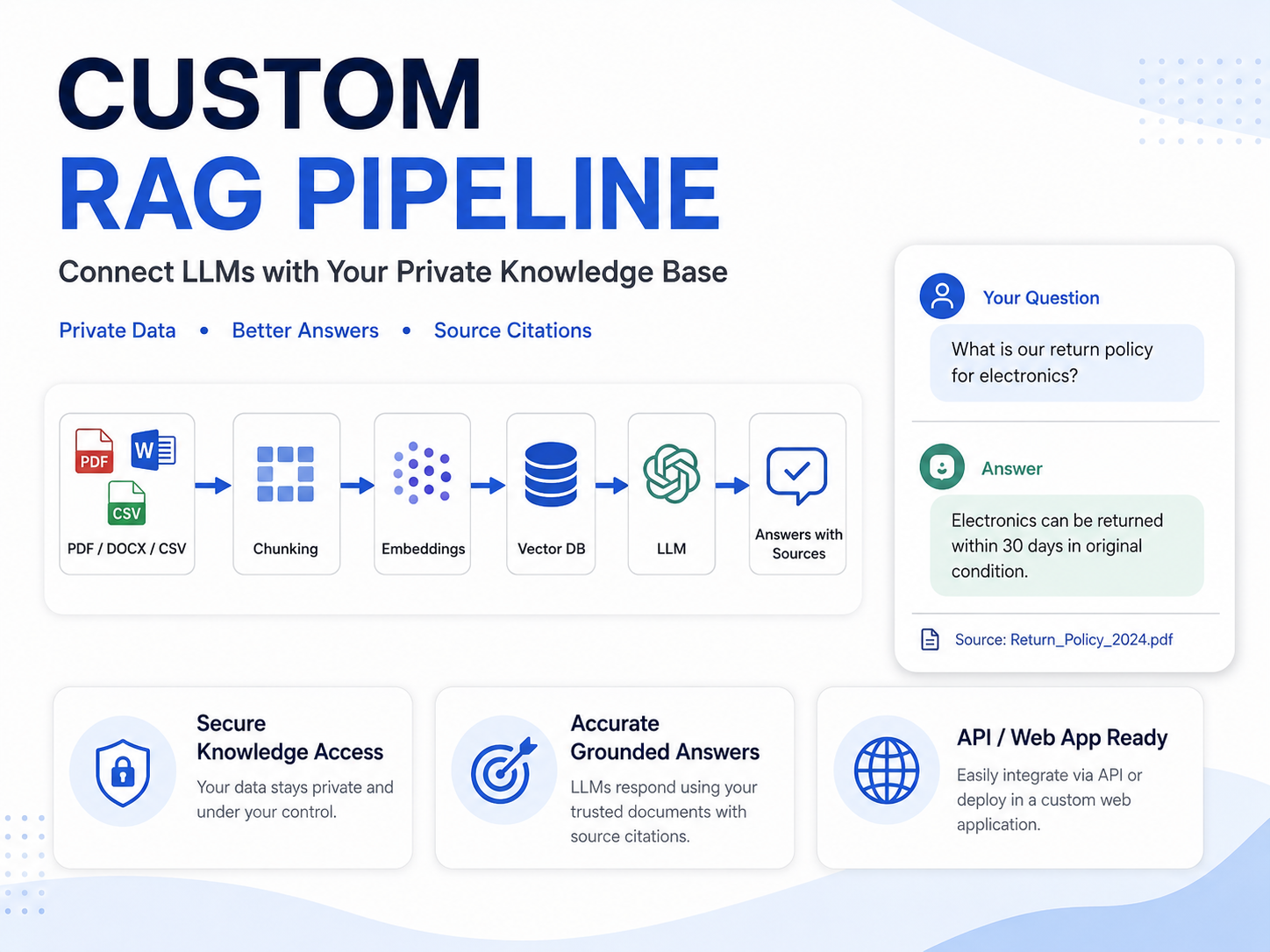
- Built a multilingual RAG pipeline for PDFs and PowerPoint files containing text, diagrams, scanned content, and slide images
- Extracted and indexed document content with page-level and slide-level references for citation-backed answers
- Added image-aware referencing so retrieved answers could be connected with relevant figures, diagrams, and visual document content
- Used ChromaDB and embeddings for semantic retrieval across large document collections
- Integrated Gemini-based reasoning and multilingual generation for document question answering
- Stored structured data in PostgreSQL and built natural-language access to database-backed information
- Combined retrieval, database access, and LLM reasoning so users could ask questions without manually writing SQL
- Returned formatted responses suitable for dashboards, APIs, learning workflows, and decision-support interfaces
- Added configurable question and MCQ generation for learning, assessment, and knowledge-review use cases
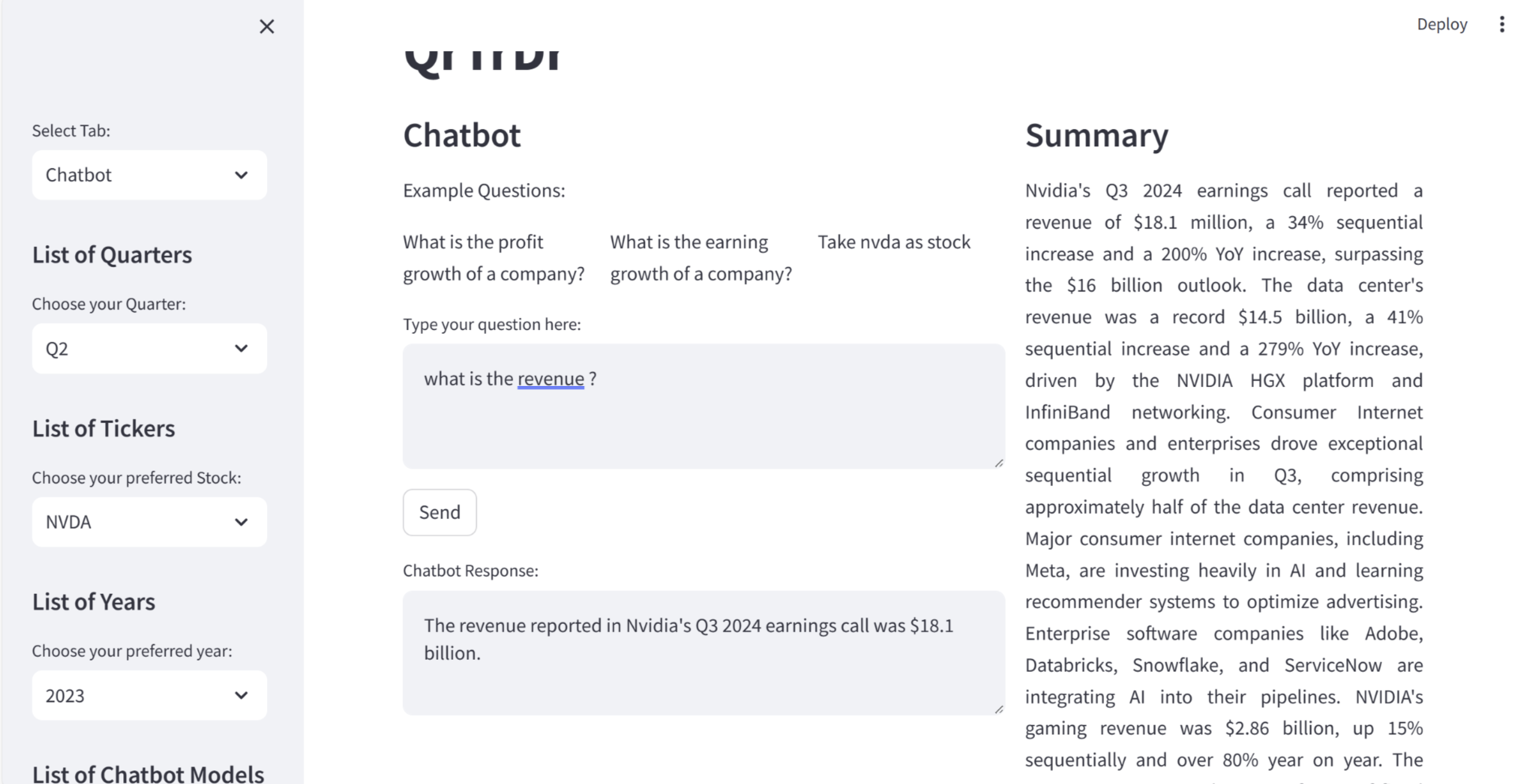
- Created an interactive interface supporting both document knowledge search and structured-data assistant examples
Results
- Created a reusable LLM assistant spanning both structured PostgreSQL data and unstructured document collections
- Enabled citation-backed answers with PDF page numbers and PowerPoint slide references for improved traceability
- Supported multilingual search and generation across English, French, and German content
- Reduced the technical barrier between end users and structured operational data through natural-language querying
- Added automated question and MCQ generation for training, assessment, and knowledge-review workflows
- Delivered a reusable architecture for enterprise knowledge assistants, educational chatbots, and database-backed AI applications
Demo Videos
Screenshots